 WhatsApp:+852-69577225
R404131120Guide to R404131120 Alternatives, Features Applications
11/14/2025 5:11:20 PM
R404131120Guide to R404131120 Alternatives, Features, Applications & Datasheet
R404131120 Overview
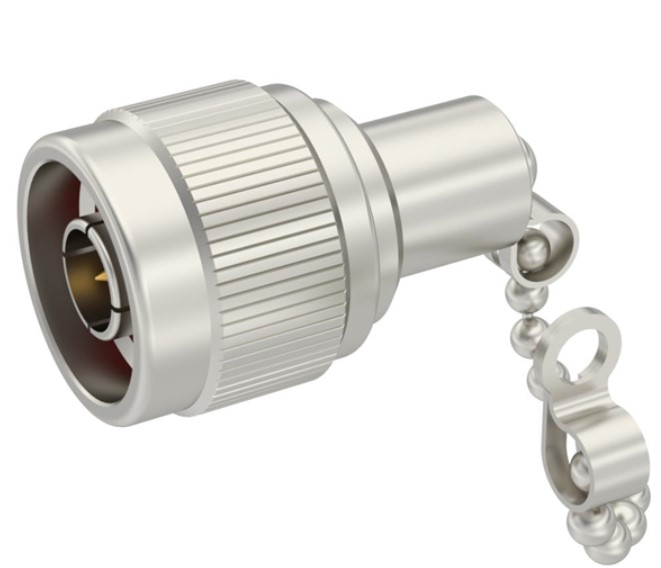
The R404131120 from Radiall USA, Inc. is a high-quality RF coaxial terminator designed for reliable performance in demanding applications. With a 50-ohm impedance, it ensures proper line termination and minimizes reflections in RF systems. Supporting frequencies up to 4 GHz and rated for 1 watt of power, it is well-suited for use in test setups, instrumentation, and communication networks where stable signal integrity is essential.
This terminator features a Type N male connector with a gold-plated contact for excellent conductivity, a brass body with nickel plating for durability, and a PTFE insulator for low-loss performance. The design also includes a convenient chain, allowing secure storage when not in use. Its free-hanging style provides flexibility across different RF configurations, and compliance with RoHS standards ensures environmental safety.
If you are interested in purchasing the R404131120, feel free to contact us for pricing and availability.
R404131120 Manufacturer
The R404131120 is made by Radiall USA, Inc. is part of Radiall, a global interconnect manufacturer founded in 1952 by brothers Yvon and Lucien Gattaz. Headquartered in France, the company operates multiple manufacturing facilities worldwide, including in the United States, Mexico, China, India, and across Europe. Radiall designs, develops, and produces a wide portfolio of interconnect solutions ranging from coaxial and RF connectors to cable assemblies, fiber optics, microwave components, and antennas serving industries such as aerospace, defense, telecommunications, medical, and industrial. The company is recognized for its commitment to innovation, quality, and reliability, offering tens of thousands of product variants, adhering to stringent standards like MIL-specs and RoHS, and maintaining strong control over advanced manufacturing processes including precision machining, plating, molding, and clean-room assembly.
R404131120 Advantages and Disadvantages
Advantages
• Very Low VSWR: ≤ 1.08 from DC–1 GHz and ≤ 1.20 from 1–4 GHz, ensuring excellent impedance matching and minimal reflections.
• Wide Frequency Coverage: Operates across DC to 4 GHz, making it suitable for diverse RF and microwave applications.
• Adequate Power Handling: Rated for 1 W average power (free-air cooled) and up to 500 W peak for short bursts at 25 °C.
• Durable Construction: Brass body with nickel plating, gold-plated contact, and PTFE insulator provides mechanical strength, corrosion resistance, and stable electrical performance.
• Wide Temperature Tolerance: Operates from −55 °C to +125 °C, enabling use in harsh or variable environments.
• Convenient Design Feature: Includes a chain to secure the cap when not in use, reducing the risk of loss.
Disadvantages
• Low Continuous Power Rating: With only 1 W average handling, unsuitable for high-power or continuous RF applications.
• Limited Peak Handling Capability: Rated for short burst peaks; sustained high-power operation risks degradation or device failure.
• VSWR Degrades At Higher Frequencies: Performance shifts to ≤ 1.20 above 1 GHz, which may be insufficient for ultra-low reflection systems.
• Mounting Style Limitation: Free-hanging cap style may be less convenient compared to panel-mount or rugged termination options.
- payment



 Online